Cebu Lechon Where Locals Actually Buy It and How to Order
A practical guide to Cebu Lechon Where Locals Actually Buy It and How to Order.

Where Cebu City locals line up for lechon
Ask a Cebuano where to buy lechon and one name surfaces before any other: CnT Lechon. Founded in 1952 on Carreta Street, this no-frills shop has become the city's unofficial benchmark. There are no glossy menus or air-conditioned dining rooms here. What you get is roasted pig, chopped to order on a wooden block, weighed, and wrapped in foil. Locals know to arrive early, especially on weekends, because stocks often sell out by mid-morning. A second major branch operates at 1377 V. Rama Avenue in Guadalupe for those who want to avoid the Carreta Street crowd.
What makes CnT the reference point is consistency. The skin crackles. The meat, seasoned from the inside with lemongrass, garlic, and spring onions, carries flavour without needing a dipping sauce. This tradition of eating lechon "walang sawsawan" runs deep in Cebu. The pig is meant to stand on its own. Pair it with puso, rice steamed inside woven coconut-leaf pouches, and you have the meal exactly as Cebuanos have eaten it for generations.
The spicy contender and the Bourdain favourite
Rico's Lechon changed the game in 1995 by introducing spicy lechon to Cebu. The concept is simple: a second roasting with a chili-based rub that penetrates the skin and outer meat. It is not a gimmick. The heat builds gradually and complements the natural richness of the pork. Rico's has since expanded to multiple branches across the metro, including Axis Escario, Mactan Promenade, Mandaue City, IT Park, and Ayala Mall Central Bloc. This footprint makes it one of the most accessible options for visitors staying in central Cebu or Lapu-Lapu City.
Zubuchon occupies a different lane entirely. When Anthony Bourdain visited Cebu and declared its lechon "the best pig ever," the shop founded by Joel Binamira on Mango Avenue in June 2011 became an international name overnight. The current branches at IT Park in Lahug and Mactan Marina Mall in Lapu-Lapu City operate daily from 11:00 AM to 10:00 PM, making Zubuchon a reliable evening option when morning-only stalls have long since sold out. The recipe uses a proprietary blend of herbs and spices, and the brand has leaned into its global reputation without abandoning the fundamentals of Cebuano roasting.
Ayer’s Lechon and the 24-hour advantage
Ayer's Lechon, founded by Anastacio Ayer in 1985, solves a practical problem for lechon buyers: timing. Its main branch at Gate 777 on Gov. M. Cuenco Avenue in Banilad operates 24 hours a day, seven days a week. This is not common among Cebu's legacy lechon shops, many of which close once the day's batch runs out. Ayer's also maintains a branch on the third floor of the Main Mall at SM City Cebu and a stall inside Carbon Market, the city's oldest and largest public market on M.C. Briones Street off Colon Street. For orders, the shop can be reached at mobile 0927 440 6891 or by email at ayerlechon@yahoo.com.
The Banilad location is particularly useful for travellers arriving on late flights or those who want to secure lechon outside standard market hours. The tradeoff is atmosphere. A 24-hour shop beside a busy avenue does not carry the same market-stall romance as Carreta Street or a Sunday morning in Talisay. But the product is consistent, and the convenience is hard to match.
Carbon Market and the by-the-kilo bargain
For lechon at its most unfiltered, Carbon Market is the destination. The sprawling complex on M.C. Briones Street runs daily from 8:00 AM to 5:00 PM and houses multiple lechon stalls selling by weight. Prices here run lower than the branded shops, though the exact per-kilo rate shifts with live-hog costs and seasonal demand. Confirm the day's price directly with the stall before ordering.
The experience is communal and utilitarian. You point to the section of pig you want, the vendor chops it on a well-worn block, weighs it, and hands over a parcel on a styrofoam tray or banana leaf. There are no chairs with backs. You eat standing at a counter or take the meat to go. The lechon here is not styled for Instagram. It is roasted for the daily market crowd that knows exactly what good lechon should taste like and will not accept less. Bring small bills, expect to get your hands greasy, and buy puso from a neighbouring stall to complete the meal.
Talisay and Carcar, the southern lechon trail
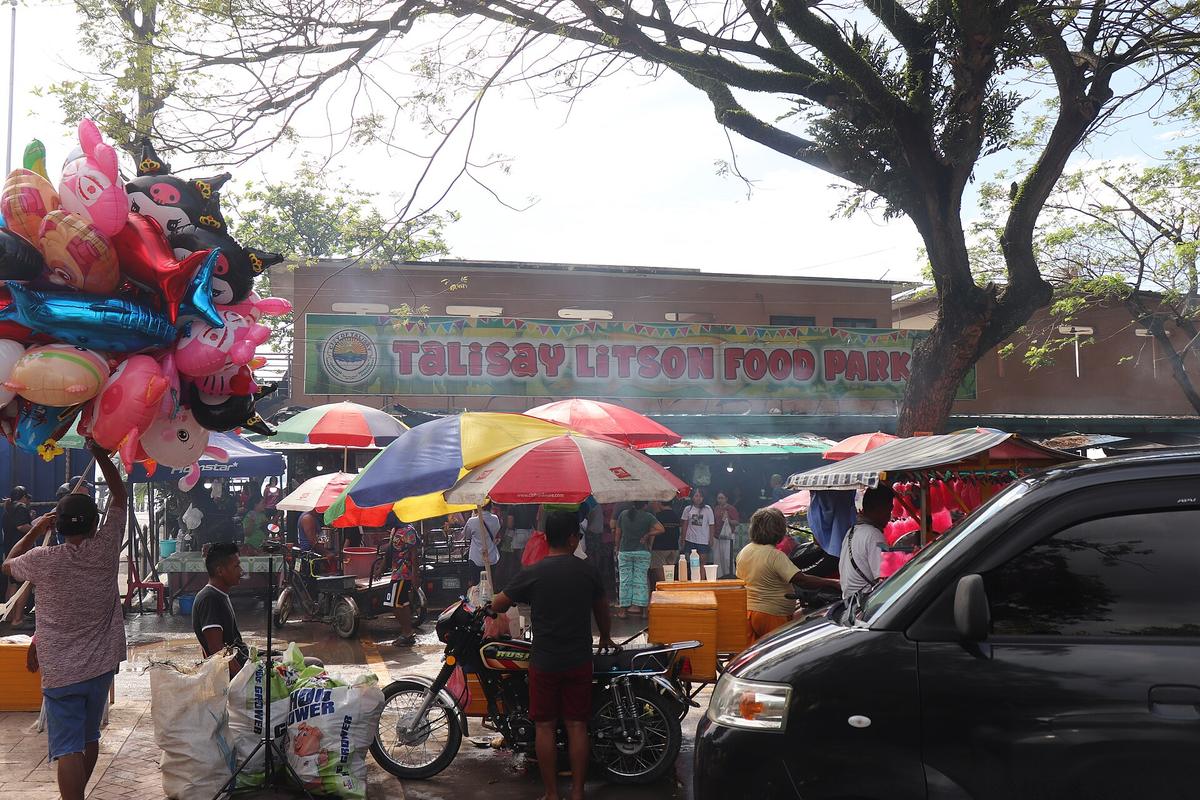
Two destinations south of Cebu City anchor any serious lechon itinerary. Talisay City's lechon vendors relocated in 2022 from Burgos Street beside Sta. Teresa de Avila church to a purpose-built Talisay Litson Food Park on the beach at Poblacion. The full row of vendors trades on Sundays from roughly dawn until early afternoon. The setting, open air and facing the water, is part of the draw. Each stall roasts on-site, and the competition keeps standards high. Go early. The best-selling stalls run out first.
Carcar City, about 40 kilometres south of Cebu City, claims deeper roots. It is widely considered the birthplace of Cebu lechon. The public market houses a dedicated lechon strip, or litsonan, where multiple vendors sell by the kilo. Mid-morning to just before noon is the window to aim for. The lechon is eaten at communal tables with puso and vinegar dip, though the meat itself is seasoned well enough that the vinegar is optional. The road journey takes roughly one to one and a half hours from Cebu City. Jeepney routes and fares to both Talisay and Carcar are subject to renumbering and modernization, so confirm current routes and fares locally before setting out.
How to order lechon like a local
Ordering lechon in Cebu is straightforward once you know the conventions. At market stalls and no-frills shops, you order by weight. Approach the counter, indicate the cut you prefer, and specify how many kilos you want. The vendor will chop, weigh, and wrap. At branded shops with dine-in areas, you can also order plated meals with rice, but the by-the-kilo option remains the standard for takeaway.
Puso is the essential side. These hanging rice pouches, sold for roughly ten to twenty pesos each depending on size and vendor, are peeled open and used to scoop meat. Vinegar is sometimes offered, but traditional Cebu lechon is designed to be eaten without it. The seasoning inside the pig, lemongrass, garlic, and spring onions, does the work. If you are buying from a market stall, bring cash in small denominations. If you are ordering from a branded shop for a group, call ahead. Per-kilo prices at all vendors fluctuate with live-hog prices and season. Confirm the day's rate directly with the shop or stall before placing your order. Opening hours and stock availability, especially at CnT Lechon, Talisay Litson Food Park, and Carcar Public Market stalls, vary by day of week and sell-out times. Check locally before making the trip.
Sources and verification
- cebutours.ph — Research source checked for this guide
- tripadvisor.com.ph — Research source checked for this guide
- cebusayerslechon.com — Research source checked for this guide
- cebusayerslechon.com — Research source checked for this guide
- zubuchon.com — Research source checked for this guide
- zubuchon.com — Research source checked for this guide
Read next
-
 Where to Eat in Cebu The List I Actually Give Friends
The unsponsored, specific Cebu City restaurant list I text to friends, organized by craving and situation rather than neighborhood.
-
 Solo Travel in the Philippines What It Is Actually Like Day by Day
Solo travel in the Philippines is not all palm trees and new friends. Here is the honest daily reality, from eating alone in Cebu City to the kindness of strangers on a long bus ride.
-
 When to Come to the Philippines the Dry Season and What Typhoon Season Means
The Philippines has two seasons on paper and many more in practice. Here is what typhoon season actually means for your trip, and when the Cebu weather really delivers.
-
 Getting Around the Philippines Ferries Budget Flights and the Jeepney Truth
From overnight ferries to budget flight roulette and the jeepney routes you actually need, here is how moving between Philippine islands really works.
-
 What the Philippines Costs From Someone Who Actually Lives Here
Philippines travel budgets online swing wildly. Here is what daily life actually costs, from carinderia meals to inter-island ferries, priced by someone who lives here.
-
 Korean Restaurants in Cebu Why There Are So Many and Where to Go
Cebu City's Korean restaurant density is no accident. Here's the backstory and the specific spots worth your money.
-
 Cebuano Chinese Restaurants The Old Ones and What to Order
The century-old Cebuano Chinese restaurants in Cebu City that define the city's palate, and exactly what to order in each one.
-
 Eating Well in Cebu City for Very Little Money
Where to eat memorably in Cebu City on a tight budget, from pungko-pungko stalls to the best carinderias near the universities.
-
 Eating Out Alone in the Philippines How It Actually Goes
The honest reality of walking into a Cebu City restaurant alone, and the specific spots where a table for one feels entirely natural.