What I Research Before Eating in a Philippine City for the First Time
My pre-arrival research process for eating well in any Philippine city, from Dumaguete to Vigan, because every city eats differently.
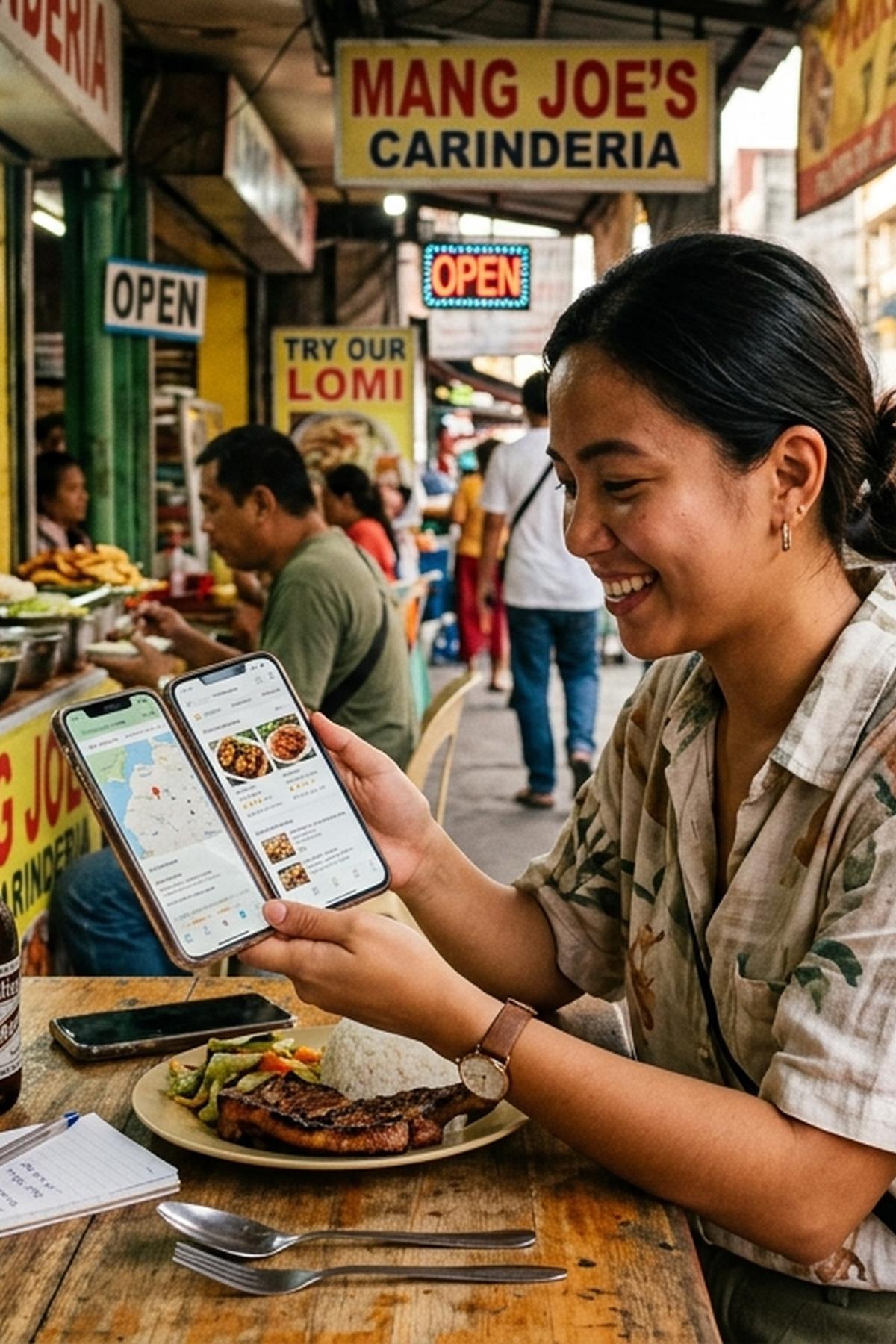
I wasted three meals in Vigan once. The food was not bad. The problem was that I ate the wrong things entirely. I defaulted to dishes I recognized from Manila menus, walking straight past empanada stalls on Calle Crisologo and a bagnet spot near the plaza that locals treat like a standing weekly appointment. By the time I understood what I had missed, my trip was nearly over.
That experience reshaped how I approach every unfamiliar Philippine city since. Showing up hungry and curious is not enough. You need to understand what that specific city actually eats before you land. Not Philippine food in general. The food that belongs to this city, this province, this ethnic group's table. That research is what this piece is about.
Before You Land: What This Research Covers
- Every Philippine city has a distinct culinary identity shaped by its region, history, and ethnic roots.
- Online tools give you a baseline picture of a destination's food culture, but they cannot replace street-level intelligence.
- The goal is not to over-plan. It is to arrive knowing which dishes are specific to this place.
- On-the-ground adjustments, talking to residents and reading market stalls, are where the real information lives.
- Wasted meals are almost always the result of eating regionally generic food in a city that has something far more specific to offer.
The Gap Between "Filipino Food" and What a City Actually Serves
Filipino food is not one thing. It is dozens of distinct regional cuisines that happen to share a country. The moment you treat it as a single entity, you stop seeing the differences that make eating in a specific Philippine city worth caring about.
Dumaguete is in Negros Oriental. The Negrense table has its own character. Silvanas are not just popular there. They are a point of local pride, the confection that gets boxed up by residents heading home after a visit. Sans rival has deep roots in the city, made differently there than in other parts of the Visayas. The kinilaw uses coconut cream in proportions you rarely encounter in Cebuano versions. Even the chicken inasal is distinct. Bacolod's version gets all the national attention, but Dumaguete cooks it differently in ways that become obvious once you order both.
Vigan is Ilocandia. The approach to food there is older and more austere. Bagnet is not deep-fried pork in a general sense. The technique involves a specific double-frying process that produces a texture very different from standard lechon kawali, and the habit of pairing it with bagoong and raw tomato slices is culturally ingrained in a way that visitors miss if they treat it like any other pork dish. The centuries-long depth of Ilocano cooking traditions is built around preservation and fermentation, shaped by a people accustomed to long dry seasons and the need to make ingredients last. Longganisa de Vigan is garlicky and aggressively vinegary, with a coarseness to the grind that has nothing in common with the sweet Lucban version or the garlicky-but-mild Cebu longganisa.
These two cities are not interchangeable. Their food is not interchangeable. Arriving in either place without understanding that means you spend meals eating things you could have had anywhere.
How the Food Cultures Differ: Dumaguete and Vigan Side by Side
| Dimension | Dumaguete (Negros Oriental) | Vigan (Ilocos Sur) |
|---|---|---|
| Key savory dish | Chicken inasal, coconut kinilaw | Bagnet, Ilocano empanada |
| Key sweet or snack | Silvanas, sans rival | Tupig, Vigan longganisa |
| Dominant flavor profile | Fresh, citrus-forward, coconut-accented | Savory, fermented, vinegar-forward |
| Common fermented staple | Tuba, fermented shrimp paste | Bagoong, buro |
| Common visitor mistake | Ordering generic Visayan dishes not specific to Negros | Treating the city as a heritage stop and skipping the Ilocano table entirely |
My Pre-Arrival Research Process, Step by Step
I run through the same sequence before every trip. It is not exhaustive. The point is to build enough of a framework that I arrive asking the right questions, not starting from zero at the airport.
- Identify which Philippine region the city sits in and which ethnic group historically shaped its cuisine.
- Search for the city's signature dishes by name, not by restaurant or "best of" list.
- Check whether any seasonal or festival-specific food falls within my travel dates. Fiestas change what is available in a city completely.
- Find two or three local voices online, residents rather than food bloggers passing through, and read what they eat personally, not what they recommend to outsiders.
- Note the markets and carinderias mentioned repeatedly by locals. These are the anchors. Restaurants come second.
That process takes a few hours spread across a couple of days before departure. It is not about filling an itinerary. It is about arriving calibrated.
Why Online Research Is a Starting Point, Not a Destination
Online research gives you a framework. It does not give you a food guide you can follow blindly.
I browse countries and menus early in my process as a first-pass tool for building a baseline picture of what is typical to a destination's food culture. That broad view is genuinely useful. It stops me from walking into a seafood-forward coastal city and spending three days eating pork because that is what most of the travel content happened to feature.
But the internet's version of any Philippine city's food culture has predictable gaps. Popular dishes get overrepresented. The places with the best photography rise to the top, not the places with the most honest cooking. Regional specificity gets smoothed out for a general audience, which usually means the most photogenic interpretation of a dish rather than the version residents actually eat on a Tuesday morning.
That is not a criticism of any single source. It is just the nature of how food content travels. Your online research gives you names and context. What those names actually taste like in a specific city, at a specific stall, on a specific morning, is something you can only find after landing.
What I Look For Once I Actually Land
The real research begins on the first morning. I walk before I eat. The goal is to read the city before I start making decisions about where to spend meals.
These are the signals I take seriously:
- Markets open before 7am. The early-morning market is where the actual pantry of a city lives. Ingredients sold in bulk there tell you what the population actually cooks at home.
- Carinderias with plastic stools and a handwritten or chalkboard menu, not a laminated tourist-facing card with food photos.
- Stalls that close by noon because they sold out. If something is gone by midday, residents are eating it.
- No English descriptions on the menu. In cities that see moderate tourist traffic, this is a useful filter even if it is not a hard rule.
- The same dish appearing at multiple stalls on the same block. That repetition confirms you are looking at a genuine local staple, not a trend item.
None of these signals are infallible. Together they paint a picture of where the real eating is happening in that city on that day.
The On-the-Ground Questions That Redirect Everything
I ask people. Not hotel staff trained to send guests toward restaurants with referral arrangements. I ask the person at the market stall, the woman eating alone at the carinderia counter, the driver who drops me off at the jeepney terminal.
Three questions have redirected more of my meals than any pre-trip research I have ever done. What do you eat here that you cannot eat in Manila? Where do you go for this specific dish? Is there a version of this dish that people here consider the proper one?
That third question is consistently the most useful. There is almost always a version locals consider the real one, and it is almost never the version tourists gravitate toward by default.
A few other on-the-ground adjustments I make after landing:
- Confirm opening hours in person. Posted hours across many Philippine carinderias and stalls are aspirational at best.
- Ask what the cook eats at home, not what they would recommend to a guest. Home food and guest food are often entirely different registers.
- Notice what the people behind the counter are eating during a break. That dish is usually the one worth ordering.
- Check whether a preparation varies by time of day. Some things only appear at breakfast. Others are strictly a midday affair and gone by 1pm.
Arriving Informed Changes What the Meal Means
Doing this research before a Philippine trip is not about generating a spreadsheet. It is about arriving with enough context that you can recognize the right thing when you see it.
The city will still surprise you. A cook you did not plan for will serve you something that becomes the meal you describe to people for years. But that only happens when you already have a sense of what you are looking at. You know when something is specific to this place. You can ask a better question. You notice the detail that a first-time visitor walks straight past.
In Dumaguete, that might be a silvana made by someone who has been doing it for thirty years out of a house on a back street, using a recipe that never made it onto any food blog. In Vigan, it might be a bagnet vendor whose product differs from every other version on the same block in texture and crackling density, and who can tell you exactly why if you take a moment to ask.
You do not find those things by accident. You find them because you showed up already knowing what to look for, and hungry for the version that actually belongs here.
Read next
-
 Batanes Regional Food and the Honest Truth About Getting There
Honest guide to Batanes food: uvud, coconut crab, pangasi, real prices, and why your flight might board a different plane than expected.
Batanes Regional Food and the Honest Truth About Getting There
Honest guide to Batanes food: uvud, coconut crab, pangasi, real prices, and why your flight might board a different plane than expected.
-
 Eating Well at Philippine Ferry Ports and Bus Terminals in the Visayas
Puso, sinuglaw, and freshly fried chicharon at Cebu's Pier 1, the Ormoc bus depot, and Dumaguete's waiting sheds. A solo traveler's guide to Visayas transit food.
Eating Well at Philippine Ferry Ports and Bus Terminals in the Visayas
Puso, sinuglaw, and freshly fried chicharon at Cebu's Pier 1, the Ormoc bus depot, and Dumaguete's waiting sheds. A solo traveler's guide to Visayas transit food.