Eating Well at Philippine Ferry Ports and Bus Terminals in the Visayas
Puso, sinuglaw, and freshly fried chicharon at Cebu's Pier 1, the Ormoc bus depot, and Dumaguete's waiting sheds. A solo traveler's guide to Visayas transit food.
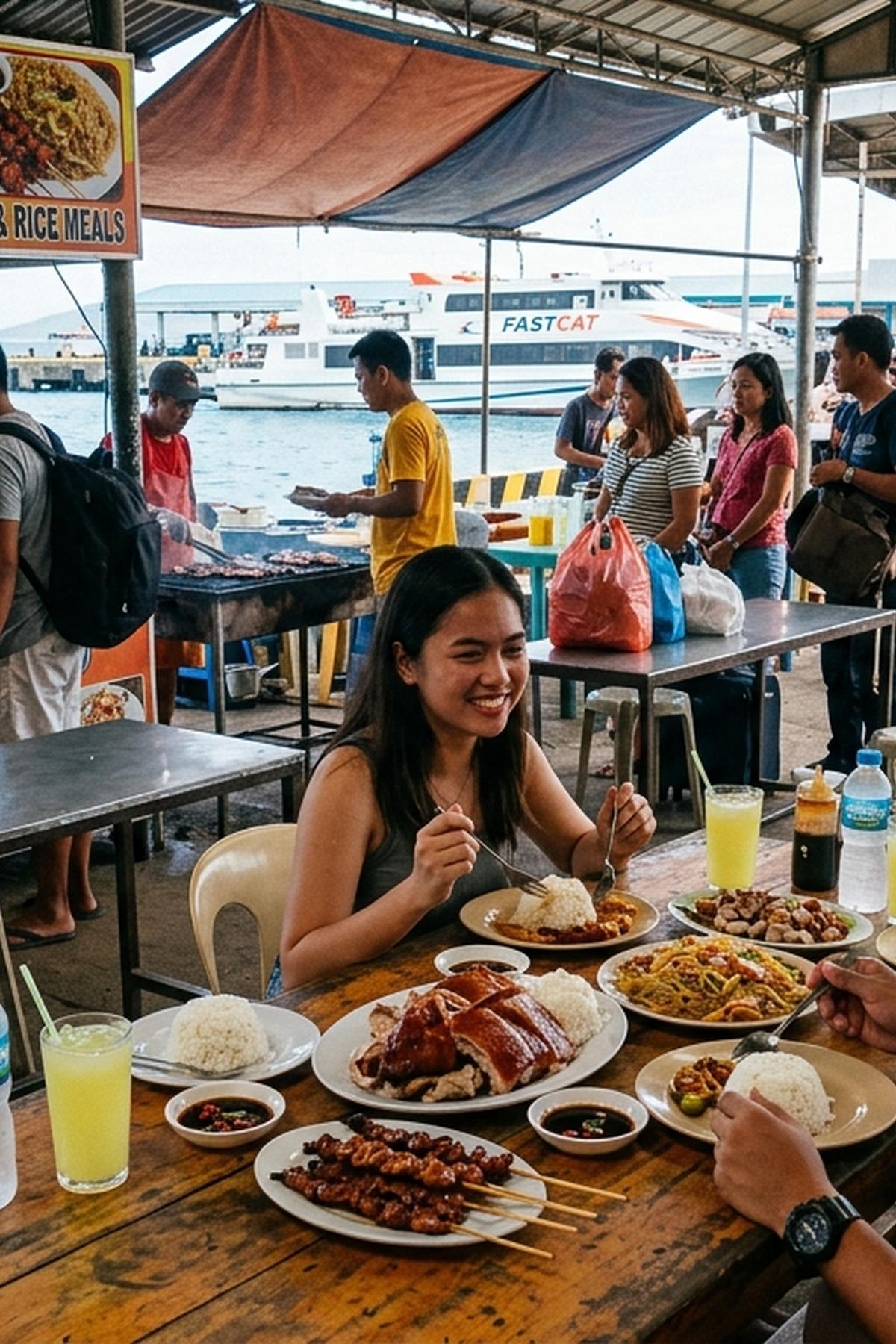
Cebu Pier 1, 6:47 in the morning. My bag was too heavy, the ferry was still two hours out, and somewhere in the half-lit stretch of vendors near the terminal entrance, someone was deep-frying chicharon in a blackened wok. The smell reached me before I had even set my bag down. That was the moment everything shifted. I stopped seeing ferry terminals as dead time between islands and started treating them as the first meal of the trip.
Transit Bites Worth Your Time
Visayas ferry ports and bus terminals are not just holding pens between islands. They are where the region feeds itself cheaply and honestly. Puso with grilled pork, sinuglaw served on wax paper, chicharon pulled straight from the oil before sunrise. These are not fallback meals. They are the real thing, eaten by the people who live here, priced for everyday use, and genuinely worth planning your arrival time around.
Why Cebu's Pier 1 Is Worth Arriving Early for
Pier 1 handles most of the fast craft traffic leaving Cebu City toward Bohol, Leyte, and the southern Visayas. The terminal building itself is functional and not particularly atmospheric. But the food stalls clustered outside the gates, and the smaller ones tucked near the inner ticketing area, run on a completely different logic.
I arrived early the second time I passed through. The first visit, I had rushed straight for the boarding queue and missed everything. The second time, I gave myself ninety minutes and walked the full stretch of vendors before spending a single peso.
Puso was the first thing I spotted. A vendor near the leftmost gate had two large woven baskets of them, each diamond-shaped packet sitting in a shallow pile. She sold them alongside grilled pork and fish, already charcoaled and kept warm over a small burner. Puso with three pieces of liempo and a small cup of vinegar dip cost me 40 pesos. I stood at her fold-out table and finished everything in under ten minutes.
Puso is a distinctly Cebuano way of packing rice. hanging rice has been part of the city's food culture long before the current wave of food tourism reached the island. For terminal eating, it is almost ideal. No plate, no cutlery, no mess. You hold it in one hand, pull the leaf open, and eat. The rice inside is cooked through and faintly smoky. It is a better vessel for grilled meat than any styrofoam container.
By 7:30 a.m. the vendors near the gate were doing steady business. Not tourist traffic. Crew members, tricycle drivers, balikbayans heading home with excess baggage, all of them moving through the stall line with the practiced ease of people who eat here three times a week.
Ormoc Bus Depot and the Case for Sinuglaw at Noon
Getting to Ormoc from Cebu usually involves a fast ferry to the port, then a short tricycle ride to the bus terminal. The Ormoc depot is the kind of place where the food vendors have clearly been operating in the same spots for years. The stalls are permanent, the signage is hand-painted, and the cooking smells hit you before you have paid the tricycle driver.
I was there on a Tuesday at about half past noon, waiting for a bus to Carigara. The stall I ended up at was run by a man in his fifties with a chalkboard listing four dishes and their prices. Sinuglaw was on it at 95 pesos for a single serving.
Sinuglaw is a Cebuano dish that combines sinugba, which is grilled pork, with kinilaw, which is raw fish cured in vinegar and citrus. The version at Ormoc was made with fresh tuna, sliced thin and mixed with calamansi, red onion, and ginger, then piled over strips of charred pork belly. It arrived on wax paper set over a plastic plate. The acidity was sharp. The pork added smokiness where the fish was clean and cool. It was one of the best things I ate on that entire trip.
"Bag-o pa ba kaon?" the man asked, gesturing at his chalkboard. Have you eaten yet? In the context of a transit stall in Ormoc at noon, that question felt less like a sales pitch and more like a genuine concern.
Chicharon was available at the stall next door. Two women were frying it in batches, pulling bubbled pork rinds from the oil and draining them over newspaper. A small paper bag cost 20 pesos. I bought two bags and ate them while waiting for my bus number to be called. The rinds were fresh enough that they still had some give before the crunch. You do not get that from a factory bag.
The Moment I Stopped Resenting Layovers
Somewhere between Ormoc and Dumaguete, a realization settled in. I had been treating terminal time as something to survive. Check the phone, find a seat, stare at the departure board, wait. The better approach had been in front of me the entire time. The food at these transit stops was not inferior to what I had been eating at sit-down restaurants. In several cases, it was genuinely better.
The shift in thinking did not start on that trip. Weeks before, I had been reading about fast travel eats and the framing stuck with me: that transit stops are food windows, not wasted hours. Once I started seeing it that way, every layover became a reason to go looking rather than a countdown to get through.
That reframe changed how I organized the whole trip. At every stop, I arrived early. I walked the full stall lineup before committing to anything. I asked what was fresh. I paid attention to which vendors had the longest queues from regular passengers rather than from confused tourists.
The result was a trip where I never had a bad meal at a transit point. Not once. The food got more interesting the further I moved from the main city terminals and closer to the working depot stops where nobody is catering to an outside audience.
Dumaguete's Waiting Shed and the Fried Fish Situation
Dumaguete does not have a large, formal bus terminal in the way Cebu or Ormoc does. Much of the inter-city bus movement happens along the national road, with passengers waiting at covered sheds or small depot areas near the port. It feels less organized from the outside, but the food infrastructure is solid once you know where to look.
I stopped at a waiting shed north of the Dumaguete port while waiting for a ride toward Mabinay. One woman was selling fried fish from a small charcoal grill. The fish were small, whole, dried and then fried, served with rice and a saucer of spiced vinegar. I paid 55 pesos for the full set. The fish were intensely salty and deeply flavored, with the kind of concentrated taste that drying and frying together produces.
A man was also walking the shed selling green mango slices in clear plastic bags, already seasoned with bagoong and calamansi. The mango was ripe-sour and the bagoong was funky in exactly the right way. I bought one bag. I could have bought several more.
The Dumaguete food scene at this level, the informal, pavement-adjacent, transit-dependent level, runs on fresh ingredients because turnover is high and storage space is minimal. That is a feature, not a limitation. When a vendor cannot store food for days, everything on the grill is from today.
How to Read a Terminal Food Stall Before You Order
Not every stall at every terminal is worth stopping at. Some are there by default, not by quality. After several trips through Visayas terminals, a rough system for deciding what to approach and what to pass formed naturally.
- Watch the queue before joining it. Local workers, drivers, and regular commuters choose stalls based on habit and genuine quality. A line of people who clearly eat here often is the clearest signal you will get.
- Check what is visible on the cooking surface. Fresh oil, active flames, and recently placed items are good signs. Dark oil that has not been changed recently, food sitting unheated, or stalls with no visible cooking activity are worth skipping entirely.
- Ask what just came out. In Bisaya, a simple "bag-o pa ba?" gets you a straight answer almost every time. Vendors who answer with confidence are telling the truth. Vendors who deflect or wave their hand vaguely are not.
- See the price before the food is served. Terminal stalls vary more in pricing than street stalls elsewhere. Some have drifted upward. Knowing the price in advance avoids discomfort after the fact.
- Eat standing if the stall is crowded. Taking up a seat at a small stall during peak hours is not good form. Most terminal food is designed for standing consumption anyway. A bamboo skewer and two hands are all you need.
Dishes That Consistently Show Up at Visayas Terminals
Across Cebu, Leyte, and Negros Oriental, a handful of dishes keep appearing at transit stops. They are priced low, fast to prepare, and practical to eat without a table.
- Puso , Woven coconut leaf packets of cooked rice, sold alongside grilled meat or fish. Usually 5 to 10 pesos each.
- Sinuglaw , Grilled pork combined with vinegar-cured tuna, a Cebuano fusion that appears at larger depot stalls. Usually 80 to 120 pesos.
- Freshly fried chicharon , Pork rinds cooked to order or in recent batches. Best eaten within minutes of leaving the oil. Usually 15 to 30 pesos per bag.
- Fried dried fish (tuyo or danggit) , Especially common in Cebu and Dumaguete terminals. Salty, intensely flavored, pairs well with plain rice. Usually 40 to 70 pesos with rice.
- Green mango with bagoong , A transit snack rather than a full meal. Tart mango against fermented shrimp paste. Usually 15 to 25 pesos per bag.
- Biko and other kakanin , Sticky rice cakes wrapped in banana leaf or plastic. Filling, sweet, and easy to carry. Usually 10 to 20 pesos per piece.
Terminal Food at a Glance Across the Visayas
| Terminal | Top Dish | Price (PHP) | Best Time | Insider Note |
|---|---|---|---|---|
| Pier 1, Cebu City | Puso with grilled liempo | 35 to 80 | 5 a.m. to 8 a.m. | Vendors near the leftmost gate have the freshest puso early morning. Mid-morning batches are older. |
| Ormoc Bus Depot, Leyte | Sinuglaw with tuna | 80 to 130 | 10 a.m. to 2 p.m. | Look for the chalkboard stalls. They tend to rotate the menu more than laminated ones. |
| Dumaguete Waiting Sheds, Negros Or. | Fried fish with rice | 40 to 70 | Midday and late afternoon | The green mango vendors walk the sheds throughout the day. Do not wait for them to pass by twice. |
| Tagbilaran Port, Bohol | Kalamay and fresh hopia | 15 to 50 | Morning arrivals and departures | Bohol's arrival vendors set up fast and pack down faster. Buy before you clear the port gates. |
What the People Eating Here Already Know
There is a pattern with Filipino transit food that keeps repeating. The larger and more tourist-visible a terminal is, the more the food drifts toward safe, packaged, familiar things. Convenience stores, fast food kiosks, vending machines. The smaller and less photographed a terminal is, the more likely it is to have genuinely regional food being cooked fresh for people who actually use it every day.
The Ormoc depot is not on any food tourism list. The waiting sheds near Dumaguete port are not a destination anyone is writing about. But the food there is more honest, more local, and more interesting than most of what I have eaten in formal restaurants in the same cities. That is not a coincidence. It is the result of cooking for people who expect quality because they come back tomorrow.
Filipino food culture has always operated on the principle that good eating does not require a proper table or a laminated menu. The carinderia, the paluto, the grilling station at the edge of a wet market. These are not fallback options. They are primary food infrastructure, built over generations to feed working people efficiently and well.
Visayas transit terminals fit into that same ecosystem. The vendors at Pier 1 have been in those spots for years. The sinuglaw stall at Ormoc was not set up because someone wrote about it online. These places exist because they work, because the food is good, and because the people eating there expect nothing less.
A two-hour ferry wait is enough for puso and grilled fish. Ninety minutes at a bus depot is enough for sinuglaw and a bag of chicharon. These are not compromises squeezed into dead time. They are the reason to arrive early.
Read next
-
 Batanes Regional Food and the Honest Truth About Getting There
Honest guide to Batanes food: uvud, coconut crab, pangasi, real prices, and why your flight might board a different plane than expected.
Batanes Regional Food and the Honest Truth About Getting There
Honest guide to Batanes food: uvud, coconut crab, pangasi, real prices, and why your flight might board a different plane than expected.
-
 What I Research Before Eating in a Philippine City for the First Time
My pre-arrival research process for eating well in any Philippine city, from Dumaguete to Vigan, because every city eats differently.
What I Research Before Eating in a Philippine City for the First Time
My pre-arrival research process for eating well in any Philippine city, from Dumaguete to Vigan, because every city eats differently.