Timing a Philippines Trip Around Sun Rain and the Typhoon Warnings Nobody Explains
The Philippines has two seasons on paper and many more in practice. Here is what typhoon season actually means for your trip, and when the Cebu weather really delivers.
Why Most Guides Get Typhoon Season Wrong
Most guides tell you to come November to April and stop there. That advice misses what actually happens on the ground. Typhoon season officially runs June to November per PAGASA, but the practical window extends from May through December. The real question is not whether a storm hits your dates. It is what happens when one does.
In Cebu City, January is the wettest month by rainfall volume, not August. The driest month is April. Average annual rainfall at the Cebu City PAGASA station is 1,562 mm. The temperature range is narrow: 26.5°C in January to 29.5°C in May. So the dry season is not perfectly dry, and typhoon season is not constant rain. The difference is how the weather behaves on specific coasts and what breaks when a warning goes up.


What Typhoon Season Feels Like on the Ground
Pick Your Coast by the Monsoon
The Amihan, or northeast monsoon, runs from November to March. It hits the windward side of Cebu: Liloan, Danao, and the Camotes Islands. Seas get rough on that coast. The Habagat, or southwest monsoon, runs June to October. It affects western Cebu: Moalboal, Badian, and Aloguinsan. On that side, water is calm during Amihan and choppy during Habagat. Book Moalboal in August for the sardine run and you will find it present year-round, but visibility is best December to May. During typhoon swells, the sardines scatter or disappear entirely.
When the Warning Goes Up
When PAGASA raises a Tropical Cyclone Wind Signal, you have 36 hours of lead time. At Mactan-Cebu International Airport, the domestic flight cancellation rate on a warning day runs 15 to 30 percent of flights cancelled day-of, based on 2024 MCIA data. Cebu Pacific is the airline that cancels first. The Philippine Coast Guard suspends all ferry voyages as soon as TCWS #1 or higher is hoisted over the route. You cannot cross to Camotes or Bantayan. You sit.
Stock three days of food and water. Charge all power banks. Fill your vehicle fuel tank. Withdraw enough cash because ATMs go offline in prolonged outages. If you are in a nipa hut or beachfront structure, move to a concrete building. That is not alarmism. That is what every local does.
The Blue-Sky Cancellation
A lot of the time, it does not rain at all. A typhoon can pass hundreds of kilometres north or south. You get blue sky and a cancelled ferry because the signal covers the strait. The frustration is not the storm. It is the logistics that break around it.
The Holy Week Blackout and Christmas Exodus
Holy Week: Book Four Days Ahead or Stay Home
Foreign travellers rarely plan for Holy Week. It is a domestic travel surge so intense that it functions as a travel blackout. From Maundy Thursday to Easter Sunday, bus terminals hit capacity. Ferry tickets sell out three to five days prior. Cebu City hotels spike to highest-in-year rates alongside the December 20 to January 5 period. Book any island destination for Holy Week and you pay double and queue for hours.
Christmas and Sinulog: The City Empties, Then Floods
Starting December 22 to 23, Cebu City empties. Provincial buses are full. Northbound queues at Cebu North Bus Terminal exceed two hours on January 2 and 3 during the return surge. Arrive December 24 planning to take the ferry to Bantayan the next day and you will not get a ticket.
The Sinulog Festival on the third Sunday of January fills every hotel room in the city. Occupancy hits 95 to 100 percent with rates two to three times normal. Osmeña Boulevard, General Maxilom Avenue, and P. del Rosario Street close Friday evening to Sunday midnight. If you are not there for the festival, avoid those dates entirely.
| Period | Weather Risk | Crowd Level | Hotel Rate |
|---|---|---|---|
| Mid-Feb to Mid-Mar | Low typhoon chance, dry season | Low | Cheapest of the year |
| April to May | Dry season peak (April driest month) | High (Holy Week) | Peak |
| June to July | Habagat starts, typhoon window opens | Moderate (local school break) | Moderate |
| September | Peak typhoon season | Low | Cheapest |
| December to Jan | Amihan, rough east coast seas | Peak (Christmas, Sinulog) | Highest |
| Early November | Late typhoon window, lower frequency | Low | Cheapest |


What to Skip and What to Prioritise in Cebu Province
Go to Camotes Before Everyone Else Does
The place rated highest in Cebu province is the Camotes Islands: Lake Danao, Timubo Cave, and Santiago Bay. It is under-visited relative to quality. The ferry from Danao port runs six daily departures 05:30 to 17:30 on Jomalia Shipping. Travel time is two hours. Fare is PHP 250 to 350 in 2025. Book the early departure and you have the island nearly to yourself.
Skip Oslob. Check Kawasan Before You Go.
The place coasting on reputation is the Oslob whale shark interaction. It operates daily 06:00 to 12:00 except Good Friday and Christmas Day. The foreigner fee is PHP 1,000 at the 2025 rate set by Oslob Municipal Ordinance. You get a 30-minute limit in overcrowded water with poor visibility from chumming. The ethical concerns are well documented. Skip it.
Kawasan Falls canyoneering remains partially closed since December 2021 for rehabilitation. As of June 2025, the Badian LGU allows guided tours only with no upstream entry. That may change. Confirm before you plan a trip around it.
Eat in Kasambagan and Banilad
The food scene in Cebu City is better than most visitors expect. Alejo's in Labangon sells whole lechon for PHP 7,200, open 08:00 to 18:00 daily. Good Cup Coffee Co. in Kasambagan serves a flat white for PHP 160, open 07:00 to 21:00 Monday to Saturday. Yushoken in Banilad does ramen for PHP 480 to 550, open 11:00 to 21:00 daily. The Japanese and specialty coffee in the Kasambagan and Banilad areas rivals Manila at about 60 percent of the price.
Get on the Ceres Liner
Ceres Liner buses run from Cebu City South Bus Terminal to Moalboal in three to four hours for PHP 180 to 220 in 2025. For Bantayan Island, take Ceres Liner from North Bus Terminal to Hagnaya, three and a half hours at PHP 250, then the ferry at PHP 300 to 400. The ferry runs eight daily departures 03:00 to 17:00 on Island Shipping or Super Shuttle. Travel time is one hour 15 minutes.
Common Questions
Is January really the wettest month in Cebu?
Yes. Cebu City PAGASA station data from 1991 to 2020 normals shows January has the highest rainfall volume. April is the driest. That contradicts the idea that typhoon season is the only wet period.
Can I still dive or snorkel during typhoon season?
Yes, but only on the leeward coast. During Habagat months June to October, the western coast of Cebu (Moalboal, Badian) gets choppy. The eastern coast (Camotes, Liloan) is calmer. Check the wind direction before booking.
How far in advance should I book Holy Week ferries?
Buy your ticket three to five days before Maundy Thursday. Ferry tickets to Bantayan and Camotes sell out completely. You will not find a seat if you walk up the day before the holiday.
What is the cheapest time to visit Cebu for accommodation?
Mid-February to mid-March, September, and early November. These periods fall outside domestic holidays and peak tourist months. Rates drop noticeably, and crowds thin out.
Read next
-

 Getting Around the Philippines Ferries Budget Flights and the Jeepney Truth
From overnight ferries to budget flight roulette and the jeepney routes you actually need, here is how moving between Philippine islands really works.
Getting Around the Philippines Ferries Budget Flights and the Jeepney Truth
From overnight ferries to budget flight roulette and the jeepney routes you actually need, here is how moving between Philippine islands really works.
-
 What the Philippines Costs From Someone Who Actually Lives Here
Philippines travel budgets online swing wildly. Here is what daily life actually costs, from carinderia meals to inter-island ferries, priced by someone who lives here.
What the Philippines Costs From Someone Who Actually Lives Here
Philippines travel budgets online swing wildly. Here is what daily life actually costs, from carinderia meals to inter-island ferries, priced by someone who lives here.
-
 Solo Travel in the Philippines What It Is Actually Like Day by Day
Solo travel in the Philippines is not all palm trees and new friends. Here is the honest daily reality, from eating alone in Cebu City to the kindness of strangers on a long bus ride.
Solo Travel in the Philippines What It Is Actually Like Day by Day
Solo travel in the Philippines is not all palm trees and new friends. Here is the honest daily reality, from eating alone in Cebu City to the kindness of strangers on a long bus ride.
-
 Batanes Regional Food and the Honest Truth About Getting There
Honest guide to Batanes food: uvud, coconut crab, pangasi, real prices, and why your flight might board a different plane than expected.
Batanes Regional Food and the Honest Truth About Getting There
Honest guide to Batanes food: uvud, coconut crab, pangasi, real prices, and why your flight might board a different plane than expected.
-
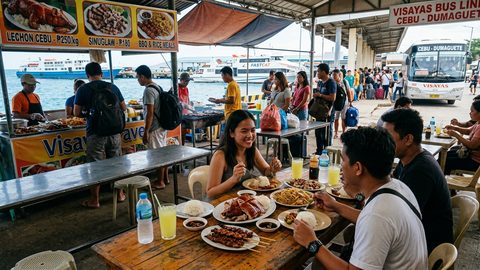 Eating Well at Philippine Ferry Ports and Bus Terminals in the Visayas
Puso, sinuglaw, and freshly fried chicharon at Cebu's Pier 1, the Ormoc bus depot, and Dumaguete's waiting sheds. A solo traveler's guide to Visayas transit food.
Eating Well at Philippine Ferry Ports and Bus Terminals in the Visayas
Puso, sinuglaw, and freshly fried chicharon at Cebu's Pier 1, the Ormoc bus depot, and Dumaguete's waiting sheds. A solo traveler's guide to Visayas transit food.
-
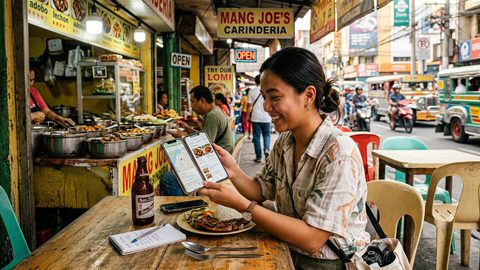 What I Research Before Eating in a Philippine City for the First Time
My pre-arrival research process for eating well in any Philippine city, from Dumaguete to Vigan, because every city eats differently.
What I Research Before Eating in a Philippine City for the First Time
My pre-arrival research process for eating well in any Philippine city, from Dumaguete to Vigan, because every city eats differently.